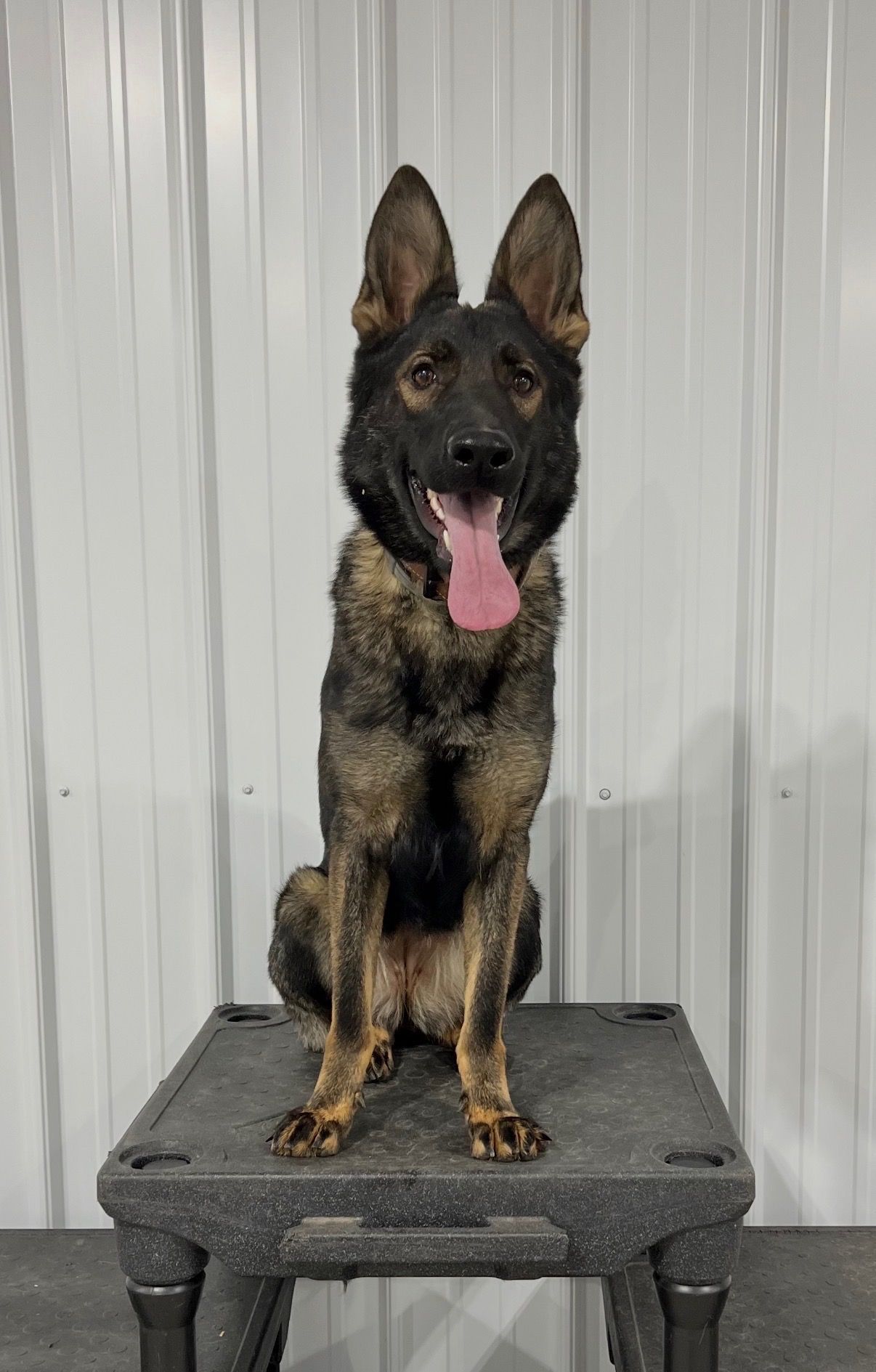
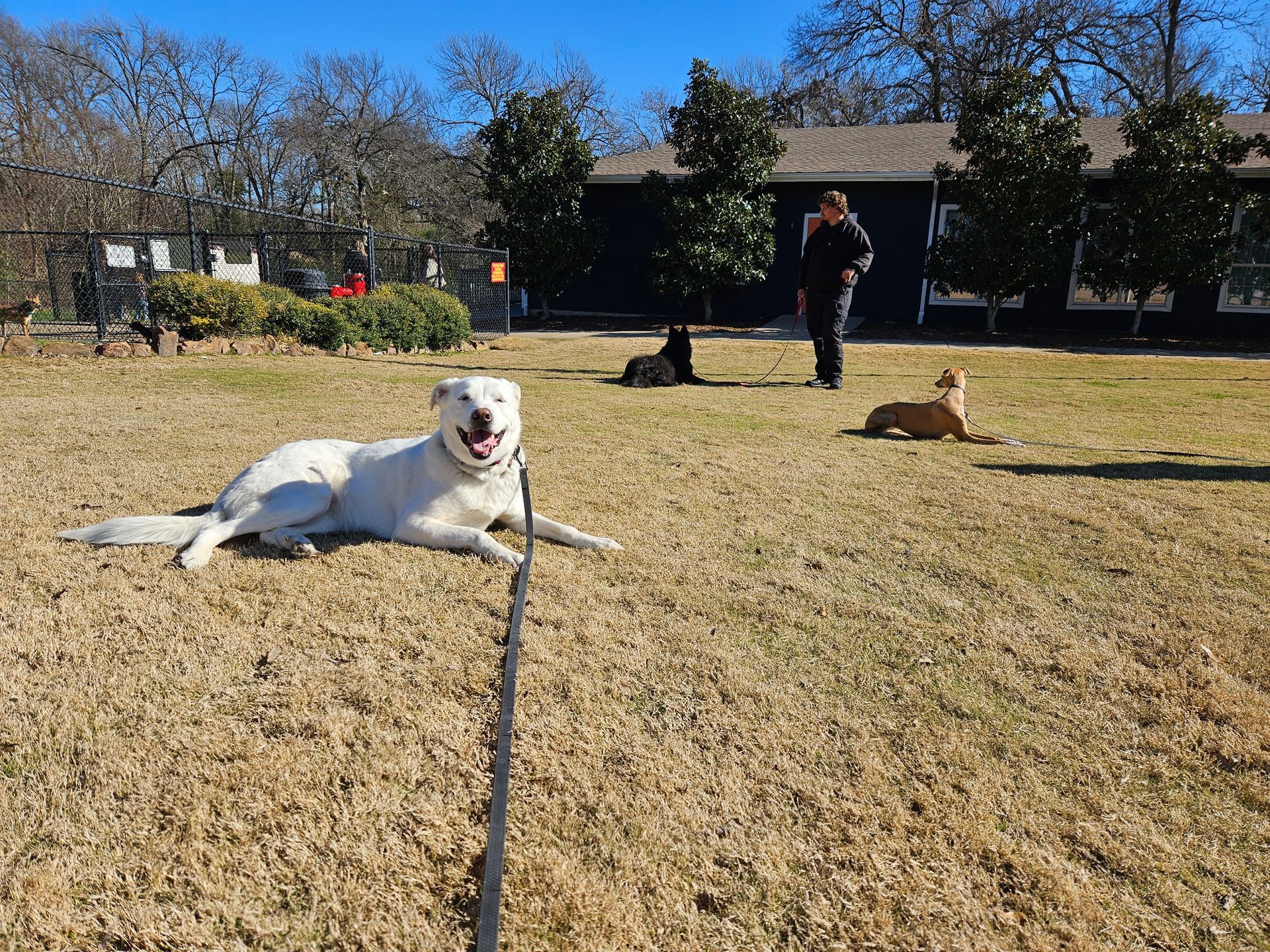
Meet Maddie, a German Shepherd whose training needed to accomplish something far more important than demonstrating a perfect heel.
Maddie's dad has a fused spine and relies on a cane to walk. Because of his limited mobility, he moves considerably slower than most people.
For Maddie, that presented a challenge.
Like many German Shepherds, Maddie naturally wanted to walk at a faster pace. But even a sudden pull on the leash could cause her owner to lose his balance and potentially fall.
So our training goal wasn't simply to teach Maddie to heel.
It was to teach Maddie that her owner's pace—not hers—determines how fast they walk.
And that was only the beginning.
Why Loose-Leash Walking Matters Even More for Owners With Mobility Challenges
For most dog owners, leash pulling is frustrating.
For someone with limited mobility, balance difficulties, or a physical disability, leash pulling can become a serious safety concern.
A dog that suddenly lunges forward, pulls toward another dog, or accelerates without warning can create a dangerous situation.
That's why teaching reliable loose-leash walking and heel positioning is about more than convenience.
It's about communication, predictability, and safety.
At
HOME Dog Training in Rockwall, Texas, we believe obedience training should reflect the actual needs of the dog and the person holding the leash.
For Maddie, that meant learning to:
- Walk at an exceptionally slow pace without pulling.
- Maintain a consistent heel position beside her handler.
- Adjust her speed to match the person walking with her.
- Remain attentive instead of independently deciding where to go.
- Practice the same behavior consistently enough that it becomes a dependable habit.
Maddie didn't need her dad to walk faster. She needed to learn how to walk slower.
That distinction made all the difference.
Teaching a German Shepherd to Walk Extremely Slowly
One of the interesting things about Maddie's training is that, to someone watching, it looks incredibly boring.
There's no exciting obstacle course.
No impressive jumping.
No dramatic demonstration of advanced obedience.
Just a German Shepherd walking very, very slowly beside her handler.
But that simple exercise requires considerable attention and self-control.
Dogs naturally have their own preferred walking speed. When that speed is faster than their owner's, many dogs begin forging ahead or putting pressure on the leash.
Our goal was to teach Maddie that maintaining her position beside her handler was more important than moving at her preferred pace.
Through clear communication, practice, and reinforcement, Maddie learned to slow down and stay connected with the person walking beside her.
The goal wasn't to make Maddie dependent on constant leash pressure. It was to help her understand what was expected of her.
That's what meaningful obedience training should accomplish.
Teaching Maddie to Retrieve Her Owner's Cane
Maddie's dad had another request.
Because his spine is fused, bending down to retrieve a dropped cane is extremely difficult.
He wanted to know whether we could teach Maddie to pick up his cane and bring it back to him.
Absolutely.
We began teaching Maddie an object-retrieval behavior specifically involving his cane.
The objective was straightforward:
If her dad accidentally drops his cane, Maddie can pick it up and return it to him.
For someone without mobility limitations, picking up a dropped object might seem insignificant.
But for Maddie's dad, that small task could make an enormous difference.
And that's one of the things I love most about individualized dog training.
A behavior that looks like a simple trick to one person can become an incredibly valuable life skill to another.
Watch Maddie Demonstrate Her Training
In this short, 24-second video, you'll see Maddie practicing her exceptionally slow heel before demonstrating how she picks up and returns a cane.
It may not be the most exciting-looking dog training video you've ever watched.
But understanding why she's learning these behaviors makes it one of the most meaningful.
▶ [Watch Maddie the German Shepherd demonstrate slow heel walking and cane retrieval](INSERT YOUTUBE VIDEO URL HERE)
Video: Maddie practices walking slowly beside her handler and retrieving a cane—two skills designed around her owner's mobility needs.
Dog Training Should Fit the Owner's Life, Not Just the Dog's Abilities
One of the biggest misconceptions about dog obedience training is that every dog should learn the same behaviors in exactly the same way.
Sit.
Down.
Stay.
Come.
Heel.
Those are valuable foundational skills.
But the real question should be:
How will these skills improve everyday life for this particular dog and owner?
For a family with young children, that might mean teaching a dog not to jump, rush through doorways, or knock over a toddler.
For an older adult, it might mean teaching a dog to walk calmly without pulling.
For someone who enjoys outdoor activities, it might mean developing reliable recall around distractions.
For Maddie's dad, it meant teaching his German Shepherd to walk at a much slower pace and retrieve his cane when needed.
The behaviors may differ, but the objective remains the same:
Teach dogs the skills that make living together safer, easier, and more enjoyable.
The HOME Dog Training Approach: Habits, Obedience, Manners, Engagement
At HOME Dog Training, our training philosophy is built around four essential elements:
Habits: Developing consistent everyday behaviors that make living with a dog easier.
Obedience: Teaching dogs to understand and reliably respond to communication from their owners.
Manners: Helping dogs behave appropriately around people, other dogs, and in everyday environments.
Engagement: Building a relationship where the dog pays attention to and communicates with their owner, even when distractions are present.
Maddie's training demonstrates all four.
Her slow walking becomes a habit.
Her heel and retrieval skills demonstrate obedience.
Her ability to walk without pulling reflects good manners.
And her attention to her handler demonstrates engagement.
These aren't four separate accomplishments.
They work together to create a dog that understands how to function successfully with her owner.
Customized Dog Training in Rockwall, Texas
HOME Dog Training is a family-operated dog training business based in Rockwall, Texas, serving families throughout Rockwall, Royse City, Fate, Rowlett, Wylie, Forney, Garland, Dallas, Plano, McKinney, and surrounding North and East Dallas communities.
Our Board & Train and Day & Train programs focus on developing practical obedience, household manners, engagement, and reliable real-world habits.
We believe dog training should go beyond what a dog can demonstrate during a lesson.
The real measure of success is what happens when the dog goes home.
Can the owner comfortably walk their dog?
Can the dog behave around guests?
Can the family enjoy everyday activities without constantly managing unwanted behaviors?
Does the dog understand how to respond in the situations that matter most to that particular family?
And, in Maddie's case, can a German Shepherd learn to slow down and retrieve a cane because those skills genuinely matter to her owner?
That's the kind of training we believe in.
Frequently Asked Questions About German Shepherd Training and Mobility-Related Dog Skills
Can a German Shepherd learn to walk slowly beside someone who uses a cane?
Yes. German Shepherds can learn to adjust their walking pace to match their handler. Training should emphasize loose-leash walking, consistent positioning, engagement, and practice at the owner's actual walking speed.
Can dogs be trained to pick up a dropped cane?
Yes. Many dogs can learn object-retrieval behaviors, including picking up and returning a cane. Training should account for the dog's physical capabilities, the object being retrieved, and the owner's specific needs.
Why is loose-leash walking important for people with mobility limitations?
A dog that pulls unexpectedly can compromise an owner's balance and increase the risk of falling. Reliable leash manners are especially important when an owner uses a cane, walker, or other mobility aid.
Is teaching a dog to retrieve a cane the same as service dog training?
Not necessarily. Teaching an individual assistance-related task does not automatically establish a dog as a trained service animal. Service dogs have specific legal and behavioral requirements, including training to perform disability-related tasks and appropriate public behavior.
Where can I find customized German Shepherd training near Rockwall, Texas?
HOME Dog Training provides individualized Board & Train and Day & Train programs in Rockwall, Texas. Training goals can be tailored to a dog's behavior, the owner's lifestyle, and practical everyday needs.
Sometimes the Most Important Training Is the Least Impressive to Watch
Maddie's story is a reminder that dog training isn't a competition to see how many commands a dog can perform.
It's about building communication and teaching skills that genuinely improve the lives of dogs and their owners.
For Maddie, that meant learning two simple but important behaviors.
Walk slowly.
Pick up the cane.
Neither requires a flashy demonstration.
But both have the potential to make her dad's everyday life a little safer and easier.
Sometimes the most meaningful dog training is a German Shepherd learning to slow down so her dad can keep moving forward.
HOME Dog Training | Rockwall, Texas
Habits • Obedience • Manners • Engagement
Stop managing your dog. Start living with them.